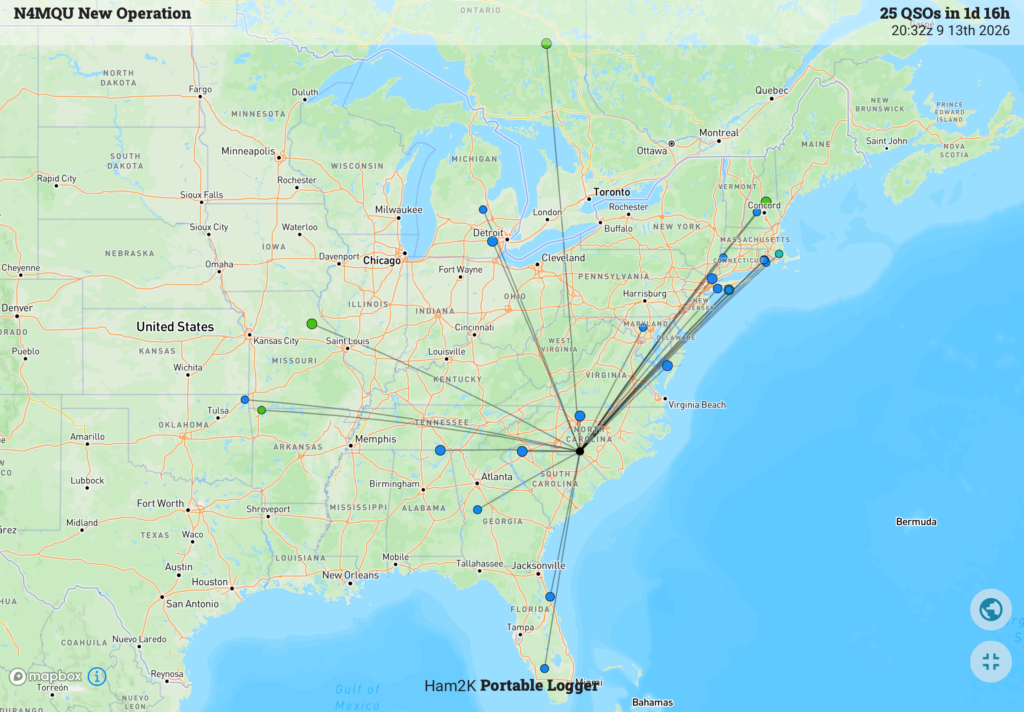
Amateur radio This morning I activated my house with 10 park contacts not really activated my house but a game I play to get ten contacts. Amateur radio is interesting one day I can talk to North Carolina on a band called 40 meters the next day I can’t talk to North Carolina but I could talk to Oklahoma on 40. It’s all magic. AI explained it in this graph
You are experiencing the classic HF skip zone phenomenon combined with morning ionospheric changes on 7 MHz.
Why Local (N.C.) Signals Are Missing
* Out of Ground-Wave Range: Ground wave propagation on 40 meters only travels about 30 to 70 miles (depending on local terrain and soil conductivity) before dying out. Other North Carolina stations beyond that radius are too far away for direct ground wave signal coverage.
* Low-Angle Skywave Overflight: 40-meter signals launched at lower take-off angles bend off the ionosphere (the F-layer) and return to Earth hundreds of miles downrange (like Oklahoma). In-state stations fall inside the “dead zone”—the gap between where your ground wave dies out and where the skywave first returns to Earth.
Why Distant (Oklahoma) Signals Are Coming In Strong
* Critical Frequency (f_c) & NVIS: For high-angle signals (going almost straight up) to bounce back down locally for Near Vertical Incidence Skywave (NVIS) coverage (0–300 miles), the ionospheric critical frequency (f_c) must be higher than your operating frequency (~7.1–7.3 MHz).
* Mid-Morning Transition: Around 8:40 AM EDT, the F-layer is still ionizing as solar radiation rises. If the critical frequency (f_c) hasn’t reached ~7 MHz yet, steep-angle signals pass right through into space instead of bending back down to North Carolina. Lower-angle signals traveling out toward Oklahoma hit the ionosphere at a shallower angle, which allows them to refract back down easily over a 900+ mile distance.
Quick Options to Work Local Stations Right Now
* QSY to 80m / 60m: 80 meters (3.5–4.0 MHz) almost always supports solid NVIS/local coverage during mid-morning hours when 40 meters has skipped out locally.
* Wait for Solar Heating: As solar radiation increases toward mid-day, f_c on 40m often rises enough to close the skip distance and bring regional N.C. signals back in via NVIS.
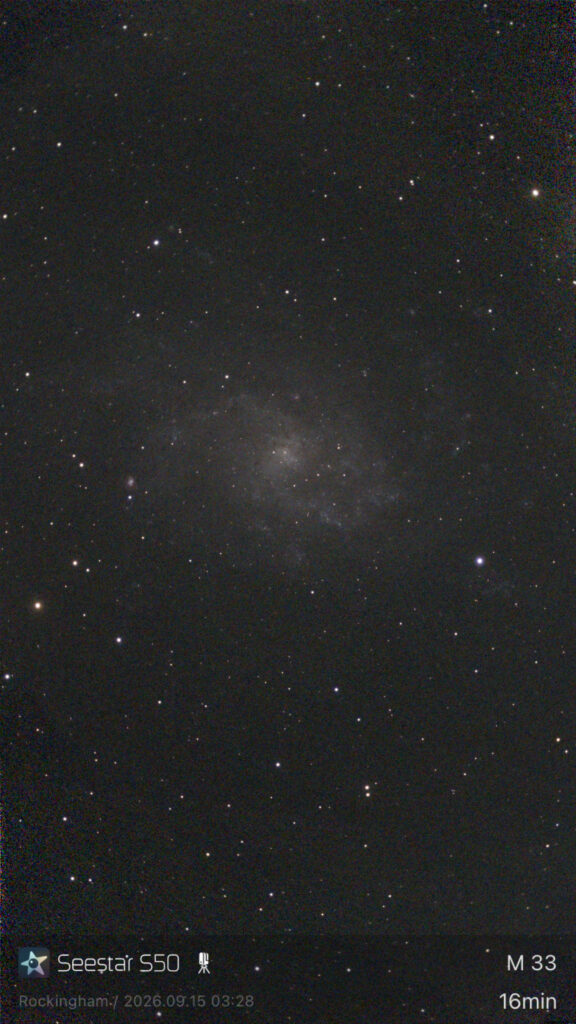
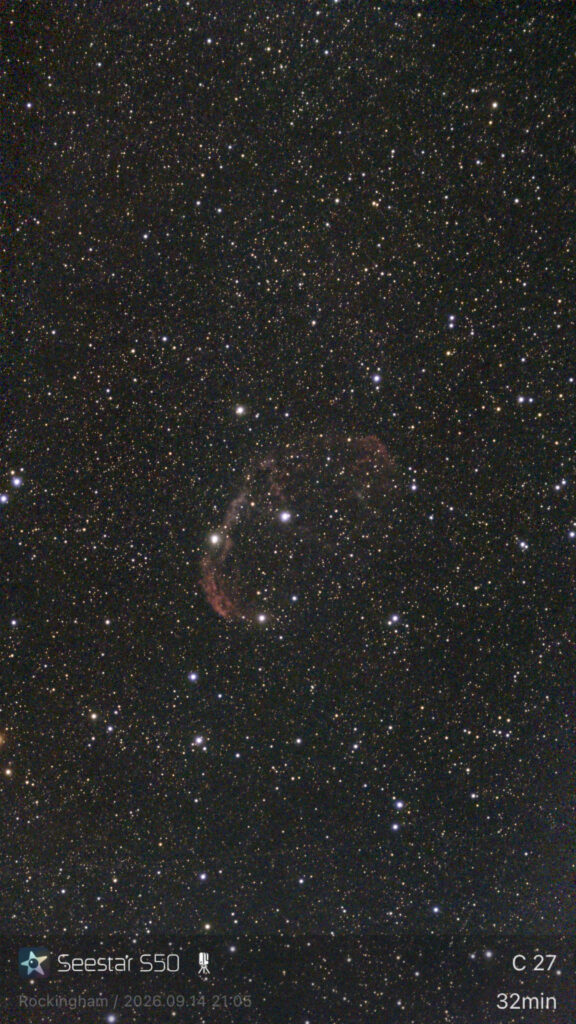
And last night was clear for my astronomy