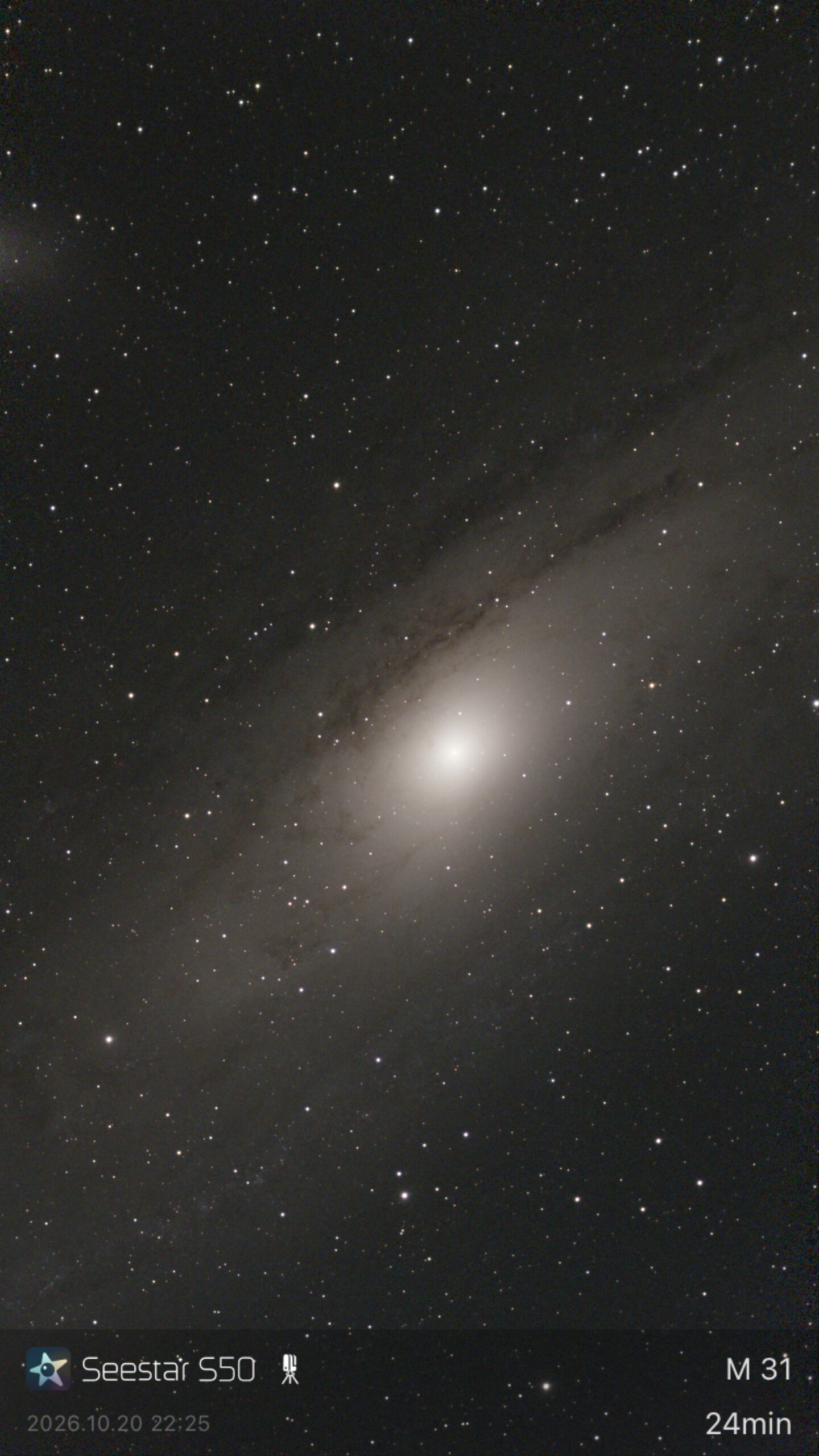
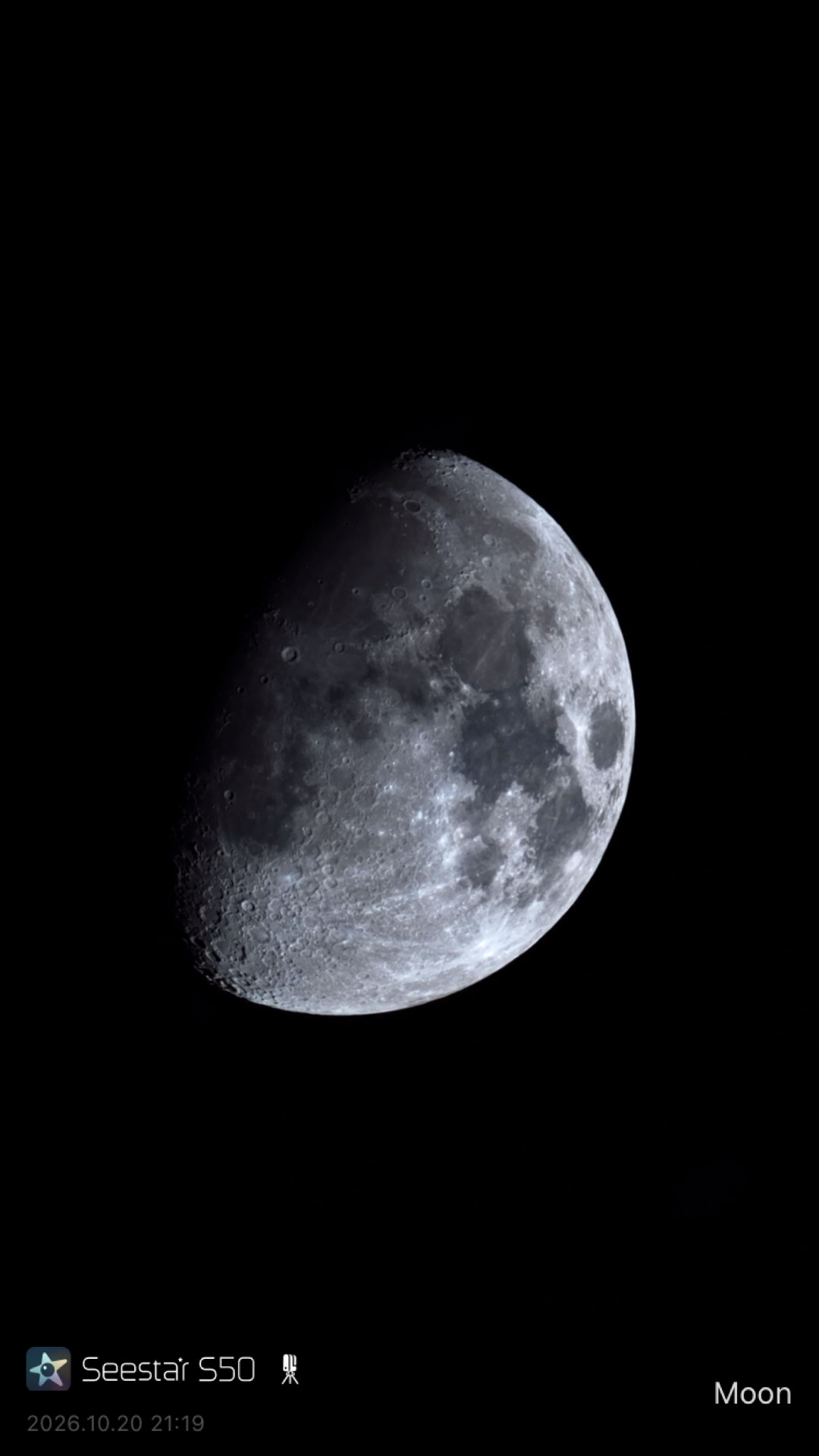
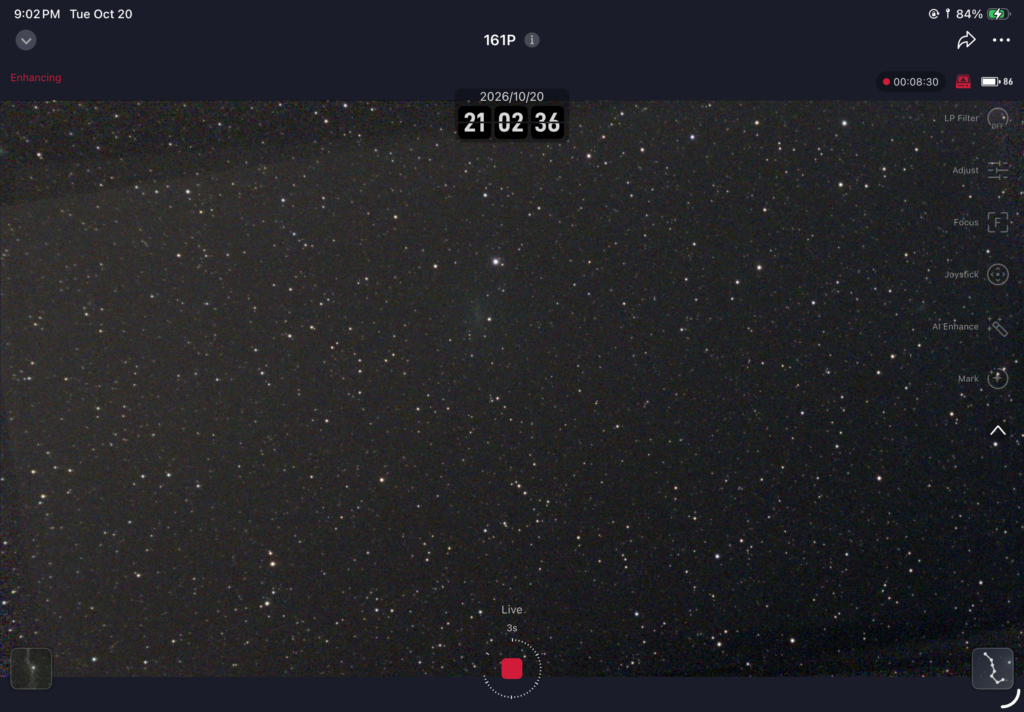
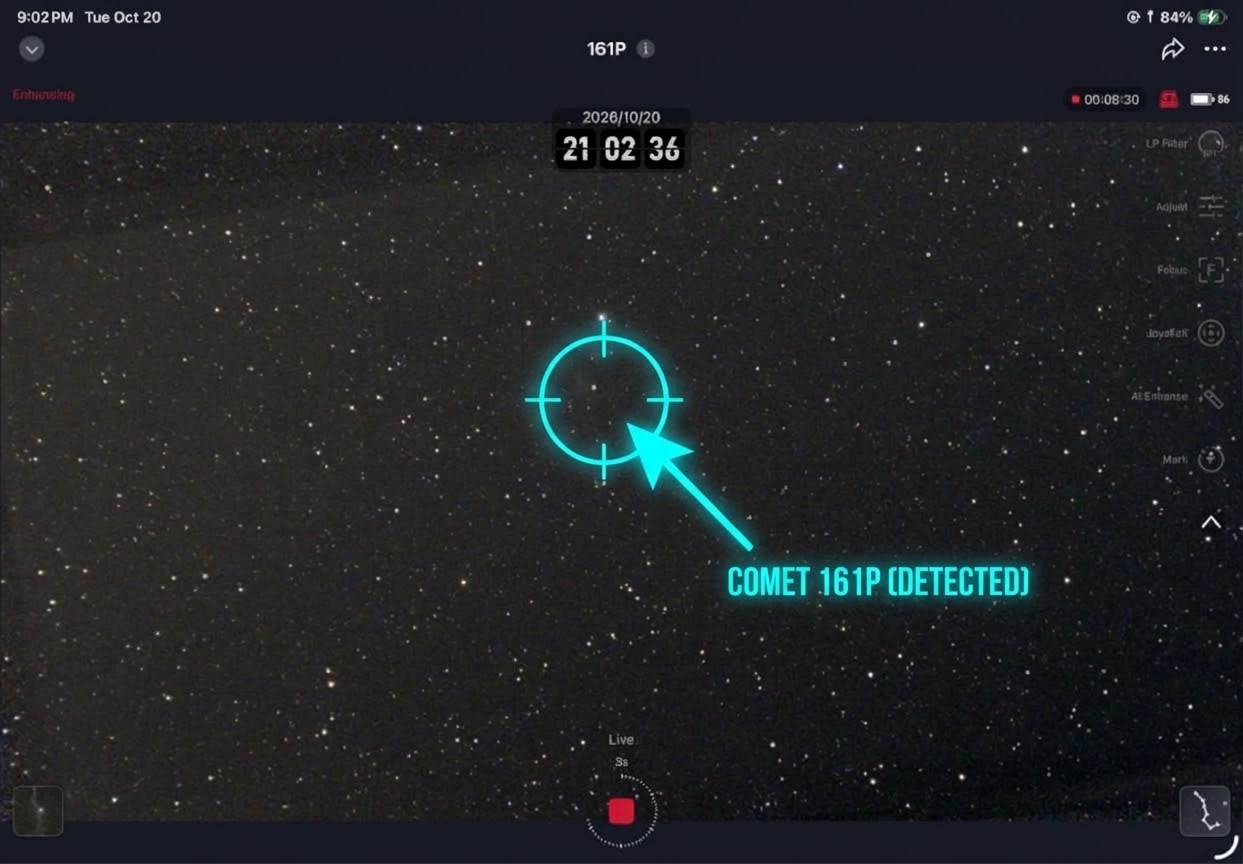
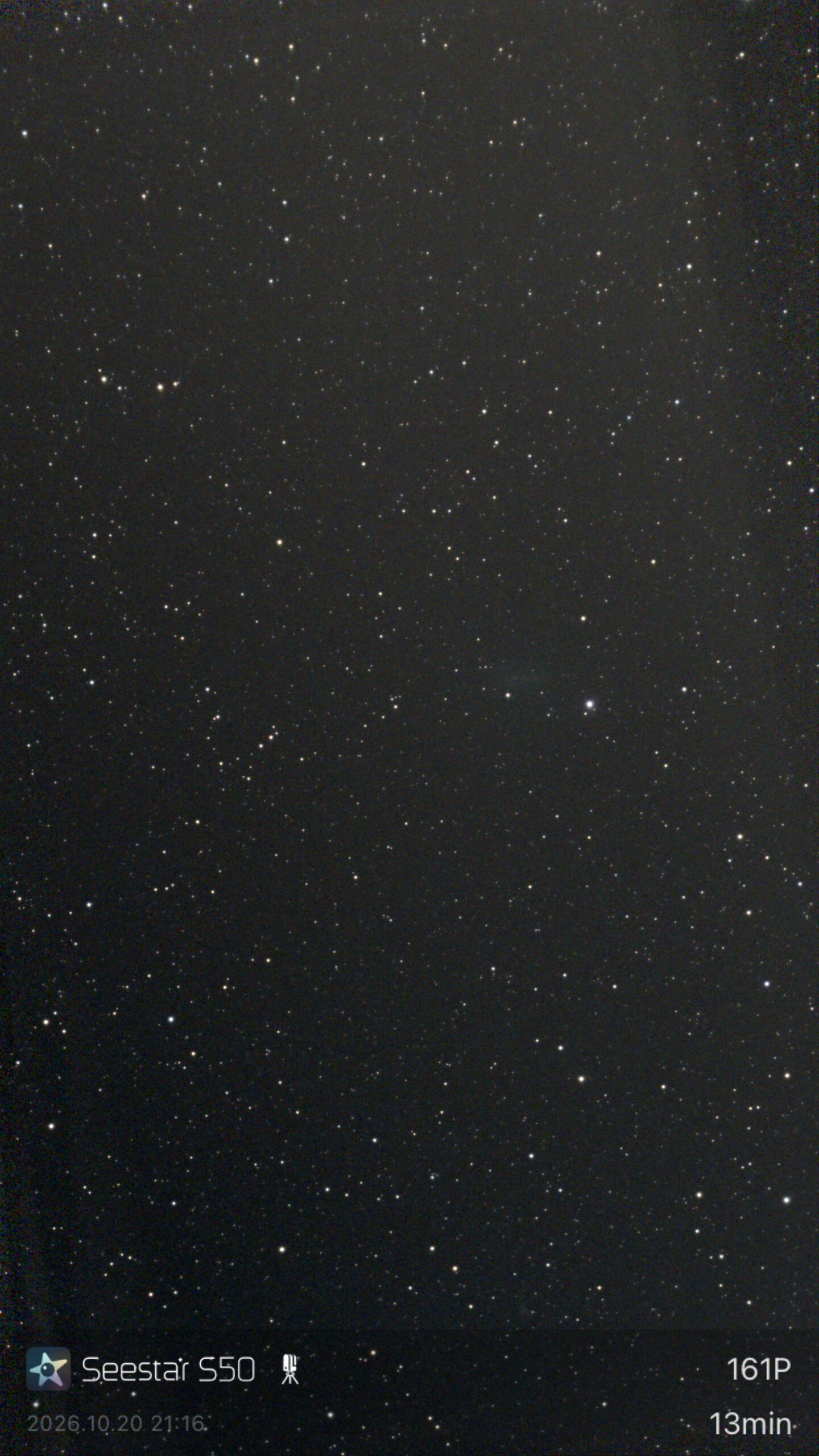
We had another nice night for astronomy on October 20, 2026. The Seestar S50 spent the evening on three targets: Comet 161P, the Andromeda Galaxy, and the Moon.
Comet 161P is also called Hartley-IRAS. Malcolm Hartley found its trail on a photographic plate on November 4, 1983, and a few days later the Infrared Astronomical Satellite recorded the same comet. It comes back about every 21 years. On this return it passed closest to Earth on October 2, about half the distance from the Earth to the Sun, and it will be nearest the Sun on November 27. It is still a small, faint visitor. In the telescope it looks like a soft glow with a short tail, not a bright streak across the sky.
Speaking of comets, here is a little history for anyone who is not an astronomer. The Andromeda Galaxy is also called Messier 31, or M31. Those numbers come from Charles Messier, a French astronomer who lived from 1730 to 1817. He hunted comets, and King Louis XV nicknamed him the comet ferret.
In 1758, while he was following a comet, Messier found a fuzzy patch in the constellation Taurus that did not move from night to night. Comets move. That patch was the Crab Nebula. He started a list of these look-alikes so he would not waste a night chasing one again. Working with his assistant Pierre Méchain, he published the list that became the Messier catalog. The 1781 edition had 103 objects. Later astronomers, using his notes, brought the total to 110. He made the catalog so comet hunters could skip these objects. Today it is the list most beginners use when they go looking for galaxies, nebulae, and star clusters.
Messier did not discover Andromeda. People have known that faint smudge for centuries. The Persian astronomer Abd al-Rahman al-Sufi recorded it in the year 964. Messier entered it in his catalog on August 3, 1764, as number 31. It is a spiral galaxy, the nearest large one to our own Milky Way, about 2.5 million light-years away.