Thank you for visiting my Astronomy at Lake Lure post. I had never been there before, so I was not sure what to expect. I packed my ham radio gear for the local parks nearby, and I also decided to bring my Seestar S50 telescope with me.
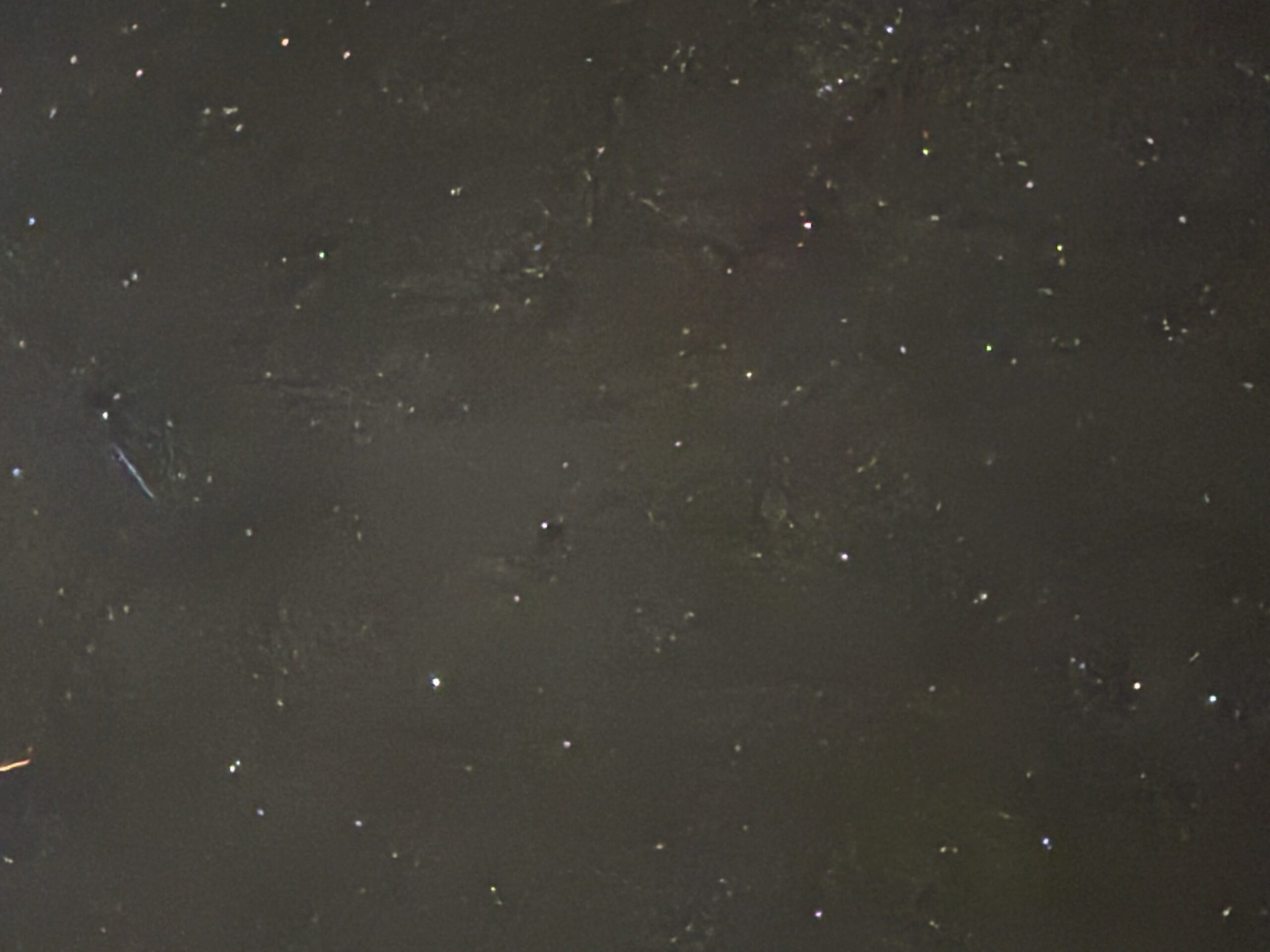
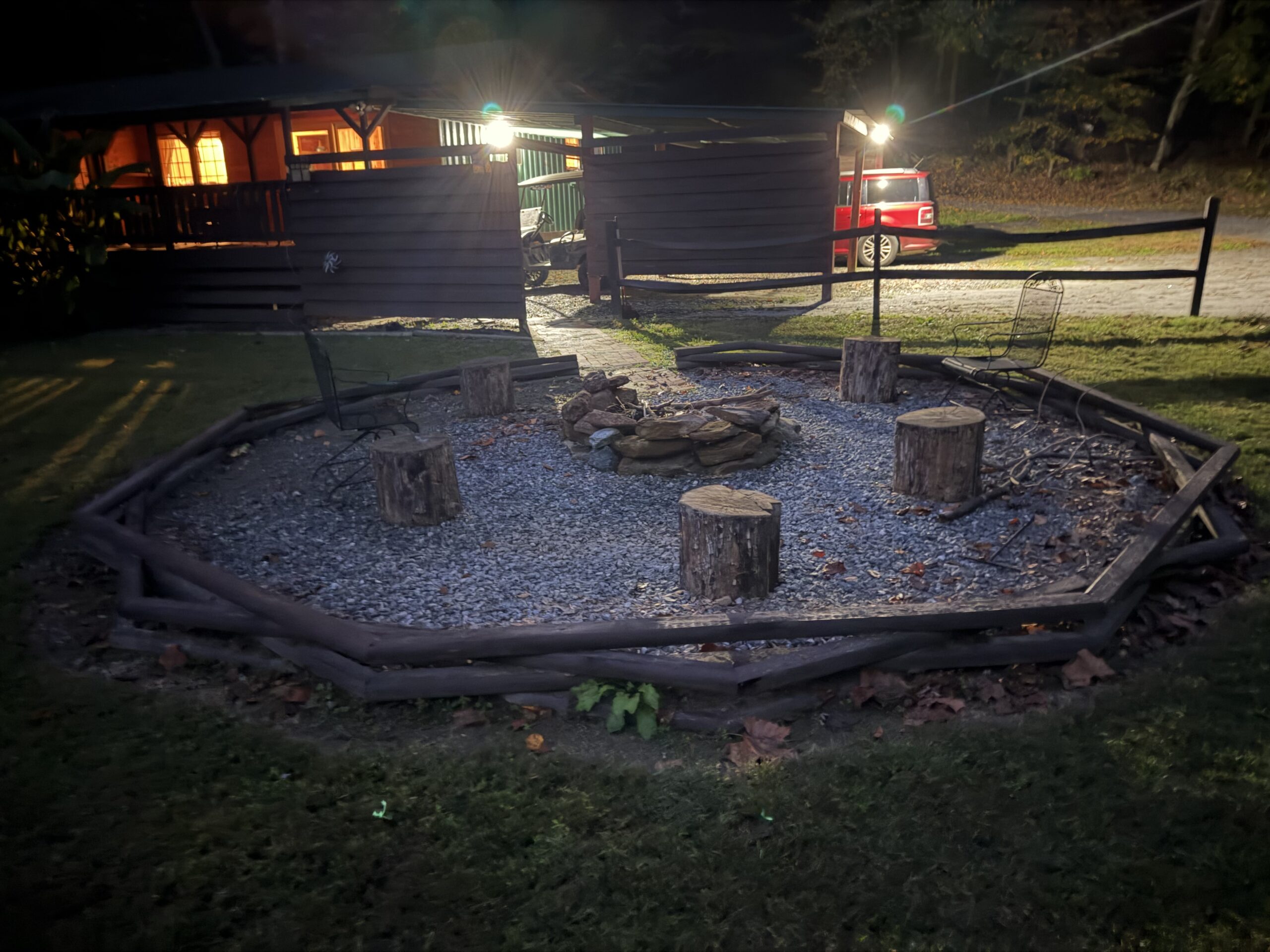
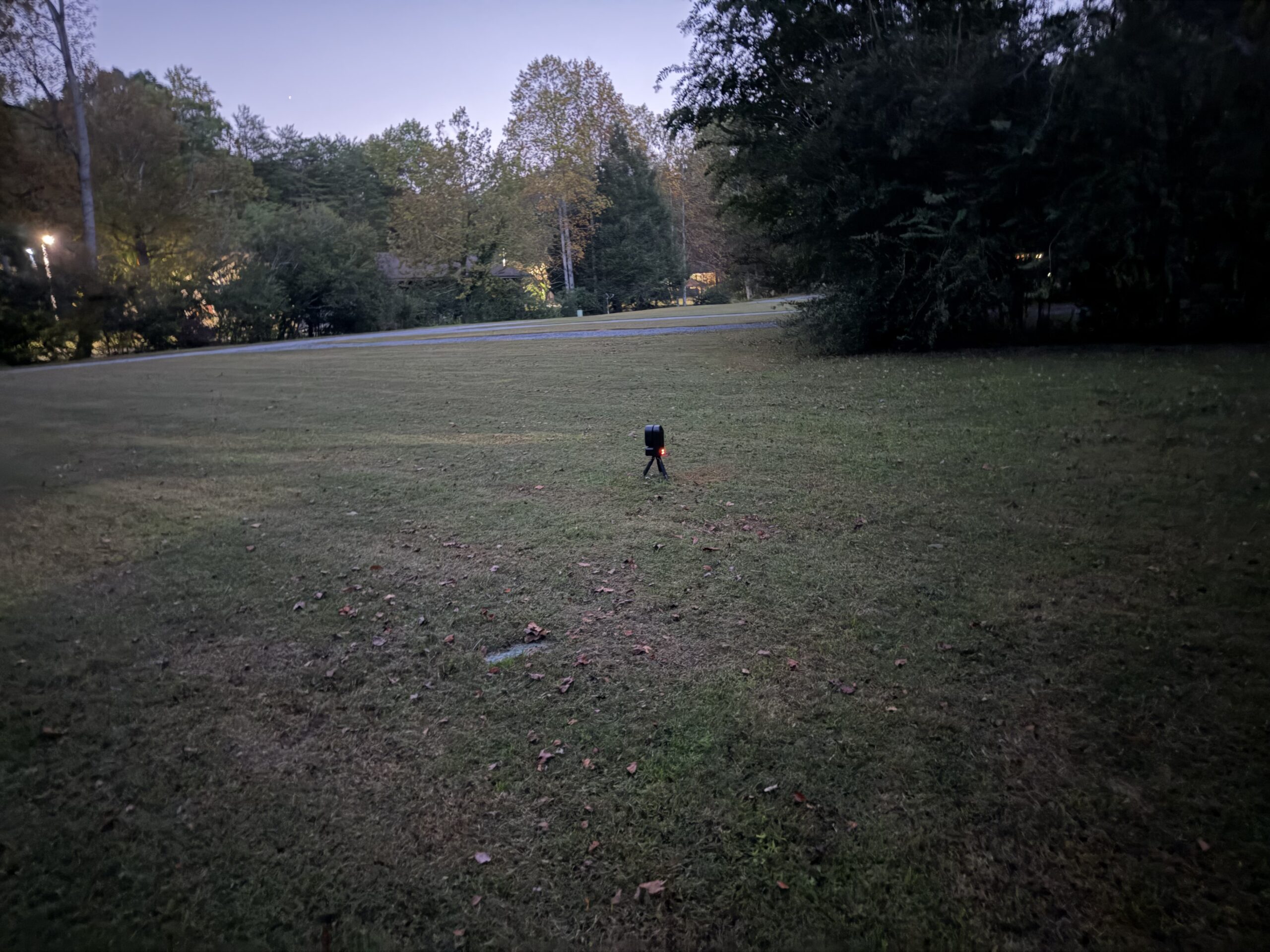
I was very pleased the first night to see the Milky Way overhead. I do not see that at home in Rockingham. The first night I did not do much. I just put the telescope in the shadow of the house, away from the automatic security light that came on. The second night I put it in the field next to the firepit. I even saw a meteor the second night, which still excites me.
The Milky Way overhead at Lake Lure, taken with the phone. The pale band is the disk of our own galaxy. A short streak shows on the left side of the frame. This image was taken with my new Iphone 17 Pro. I know it can do better but I haven’t read about how to do it.The firepit beside the field. The cabin security lights are on in this picture. That glare is why I kept the telescope in the shadow of the house the first night.The second night I set the Seestar S50 out in the open field next to the firepit, on its little tripod, with the trees around the edge of the yard.
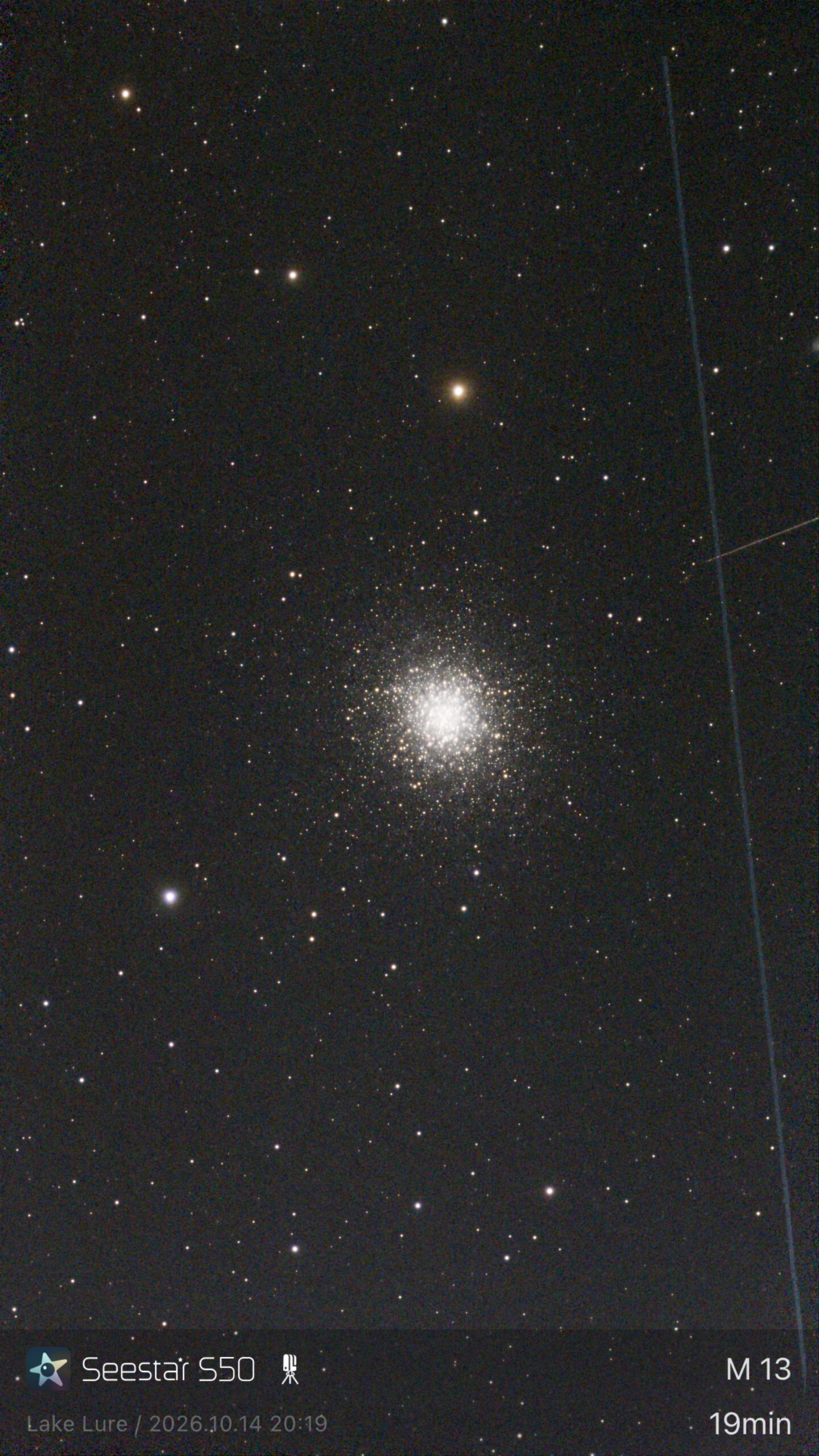
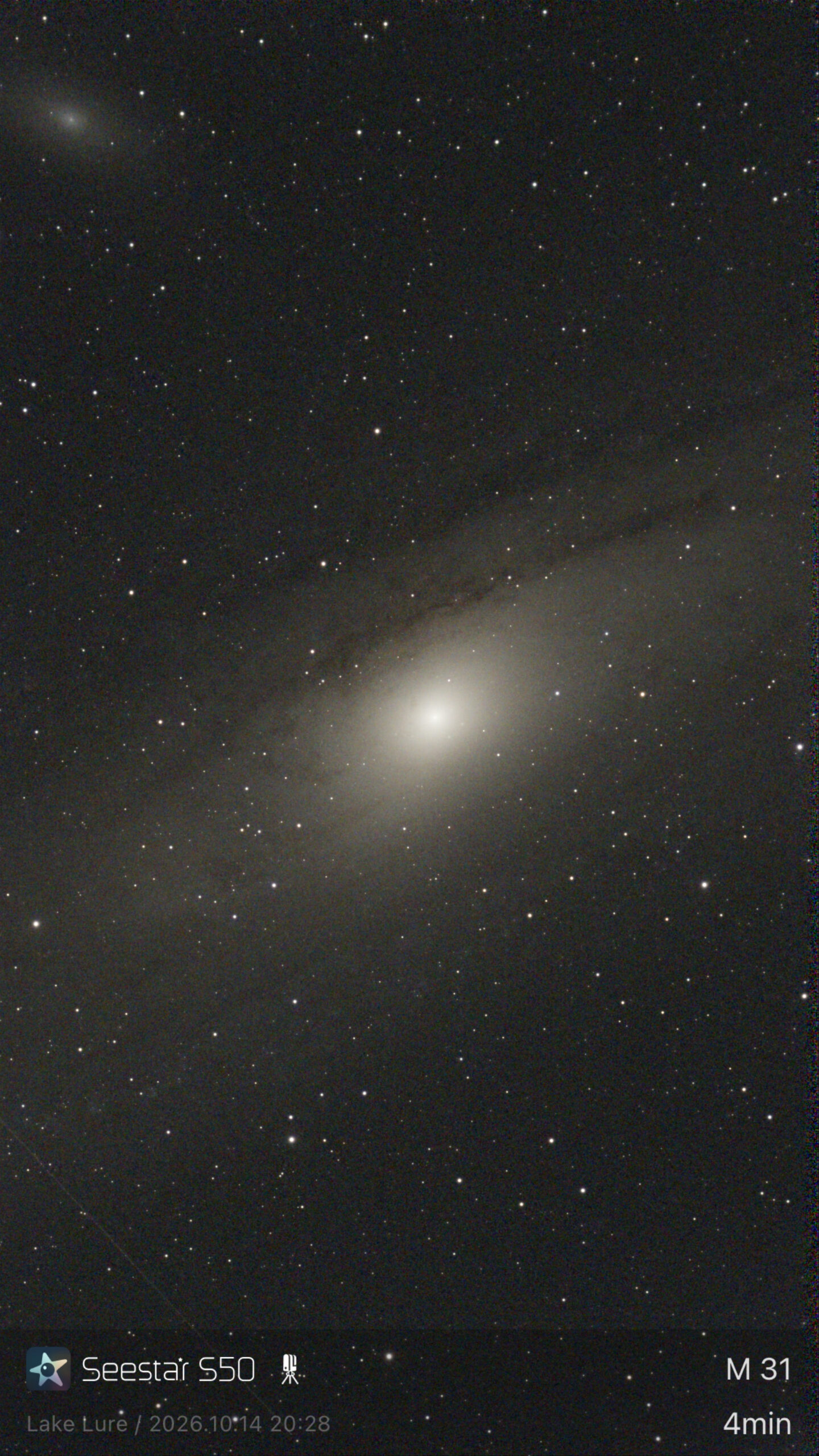
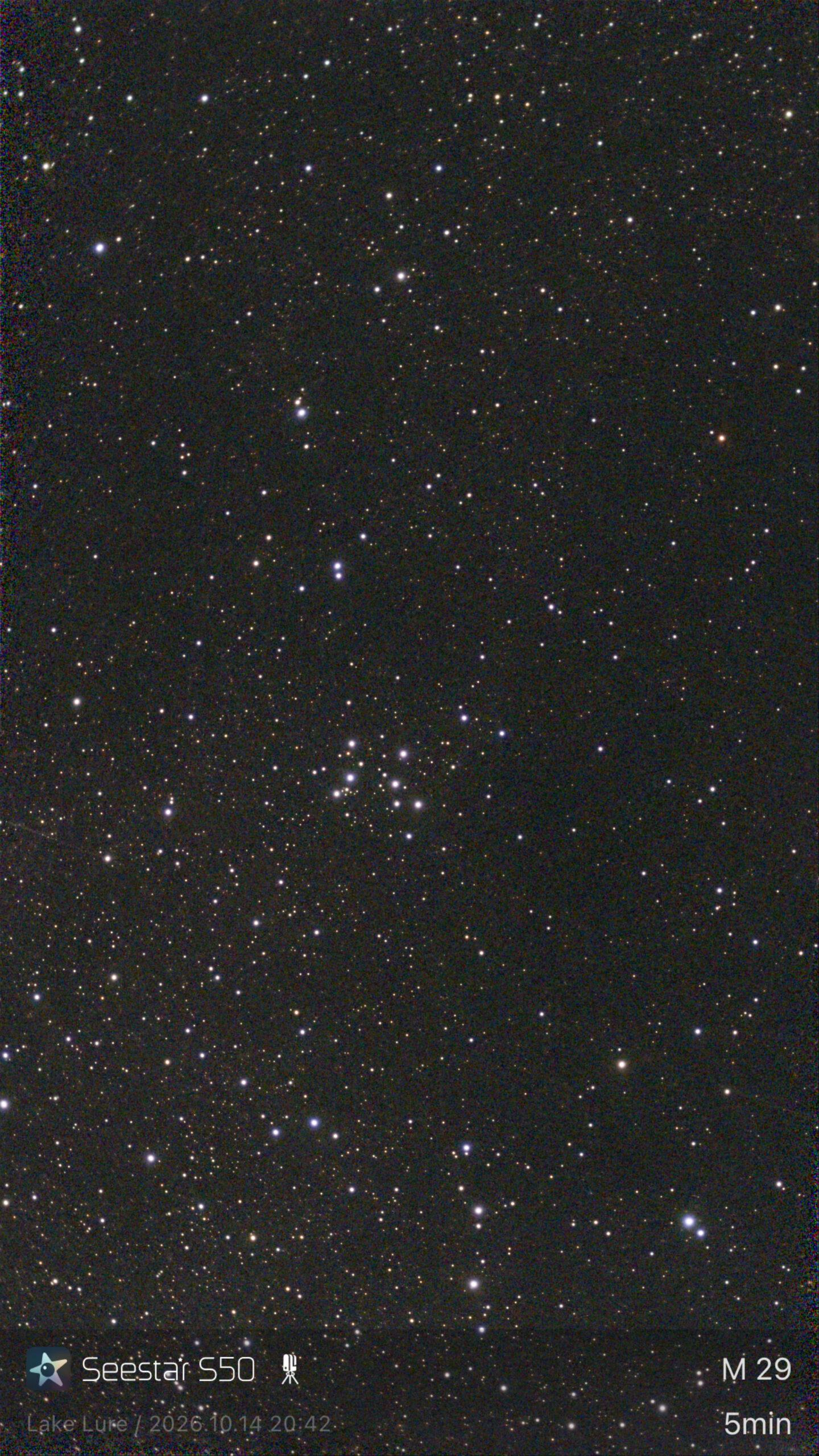
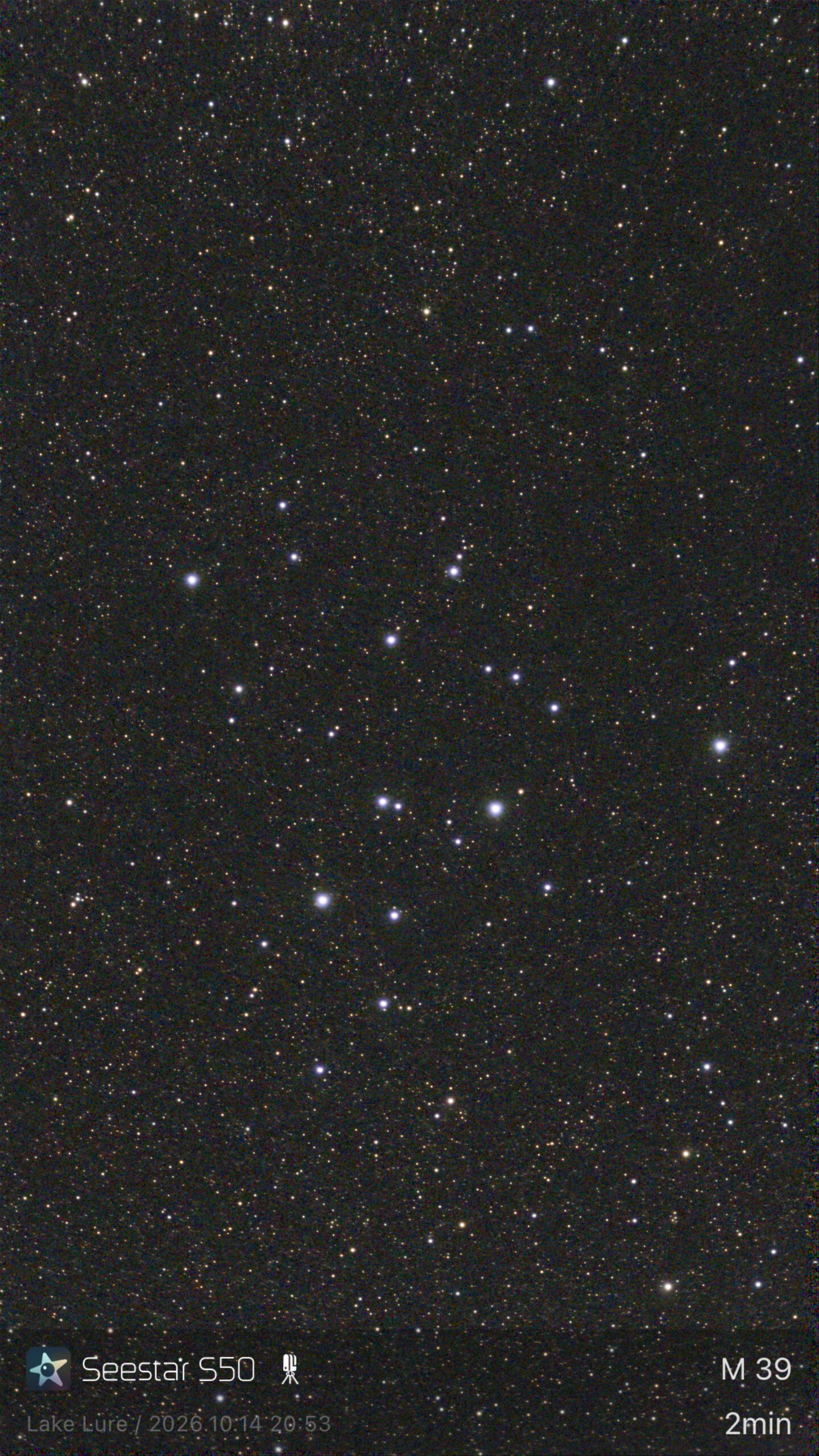
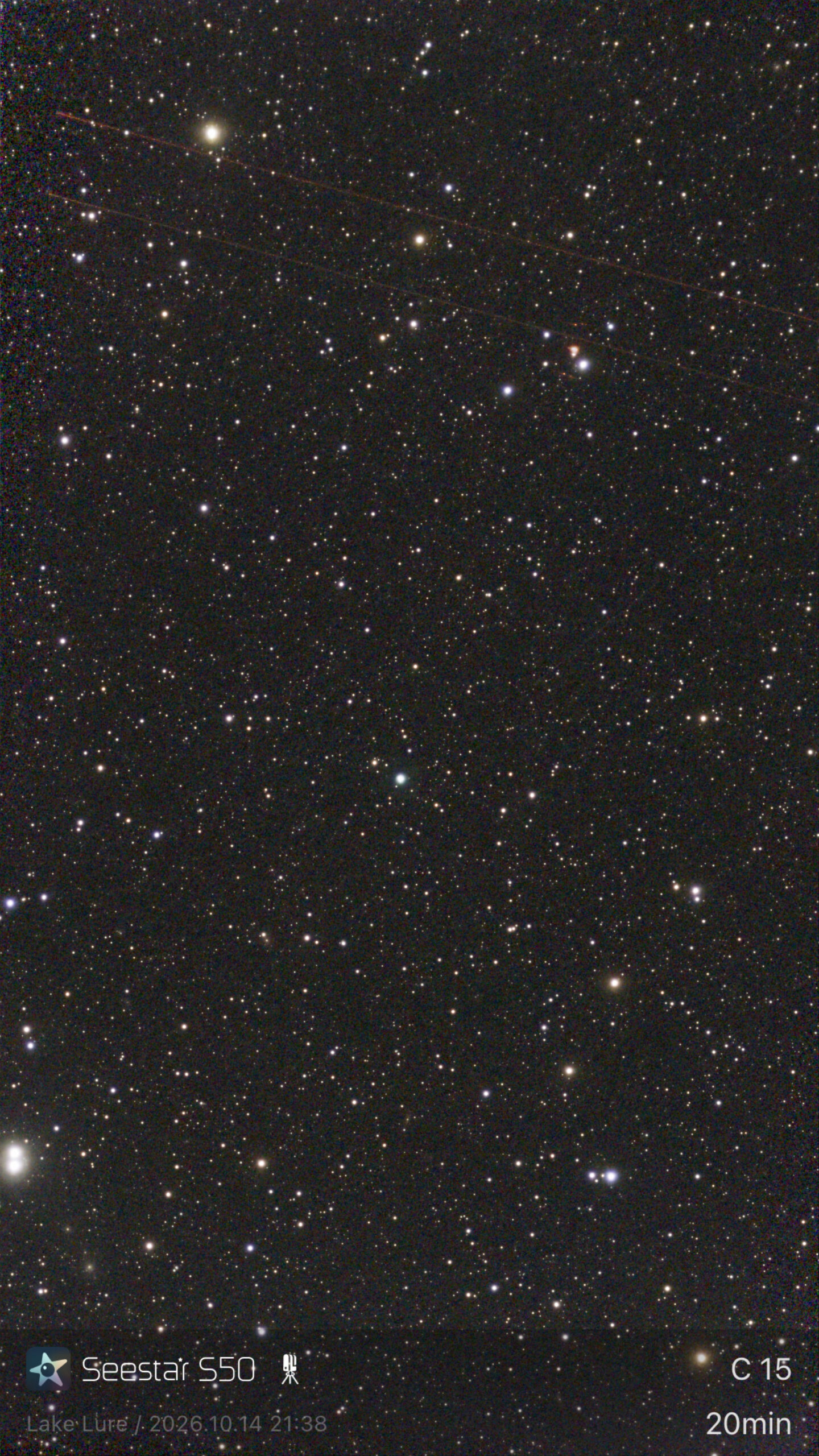
These five frames are from that session, October 14, 2026. Each one is a stack of 10-second pictures through the Seestar’s IR-cut filter.
Hercules Cluster (M13). 19 minutes, starting at 8:19 p.m. A tight ball of several hundred thousand stars. A satellite left the thin line on the right.Andromeda Galaxy (M31). 4 minutes, starting at 8:28 p.m. Our nearest large spiral neighbor, about 2.5 million light-years away. The bright core and the dark dust lane show up even in this short stack, and a small companion galaxy sits in the upper corner.Open cluster M29. 5 minutes, starting at 8:42 p.m. A compact little knot of stars in Cygnus, the Swan.Open cluster M39. 2 minutes, starting at 8:53 p.m. A loose group in Cygnus. The brighter stars form a wide triangle among the field stars.Blinking Planetary Nebula (Caldwell 15, NGC 6826). 20 minutes, starting at 9:38 p.m. The small blue-green glow is the shell of gas around a dying star in Cygnus. Three satellites crossed the top of the frame while it was stacking.
“`